

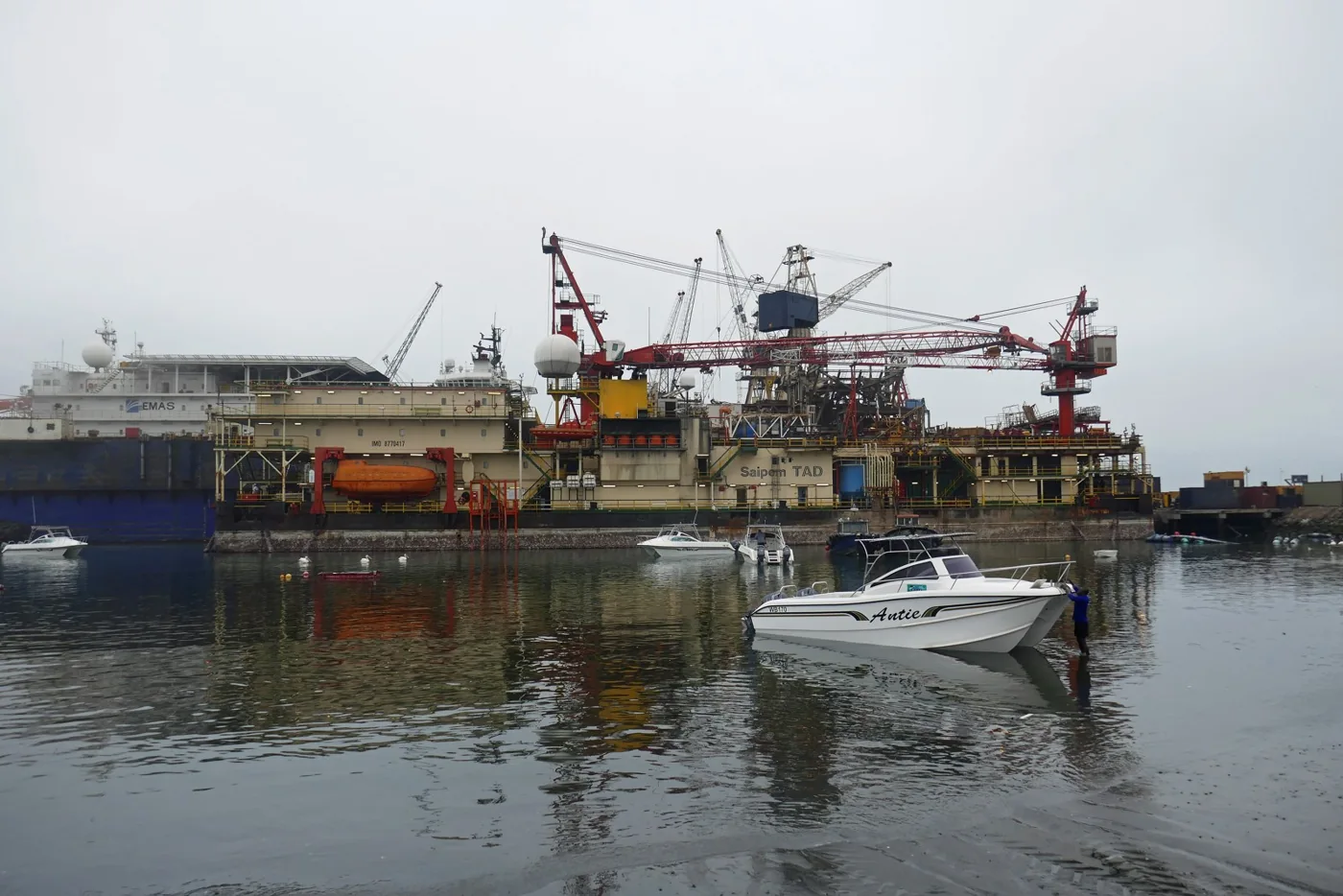
A US$2.5 billion fuel storage and pipeline project launched at Walvis Bay would give Namibia a depot capable of holding 600 million litres, Reuters reported. The plan allocates 360 million litres to diesel and the balance to petrol.
Industrialist Aliko Dangote put the planned construction period at 18 to 20 months. A proposed pipeline would link the port to inland markets including Botswana, Zimbabwe and Zambia. Both the capacity and the regional connections are project targets.
The port at one end of an inland supply chain
Walvis Bay already serves customers well beyond Namibia’s borders. The national ports authority identifies the Trans-Kalahari Corridor as a route to Botswana and South Africa. The Walvis Bay–Ndola–Lubumbashi corridor serves markets farther north, including Zambia and the Democratic Republic of the Congo. These established trade routes explain why a developer would consider an Atlantic port for a project aimed partly at landlocked economies.
Fuel reaches an inland customer through several distinct operations. A ship must discharge a cargo, tanks must hold it safely, and a distributor must move the product onwards to a depot or filling station. A storage terminal can separate the timing of an ocean delivery from the timing of an inland order. Its capacity says how much fuel it could hold at one time. It says little on its own about the number of times the tanks will be filled and emptied in a year.
What the capacity figures mean
At the announced split, diesel would occupy three-fifths of the planned storage, leaving 240 million litres for petrol. That distinction matters because a single headline capacity can conceal how much of each product is actually available to customers. A haulier buying diesel and a distributor looking for petrol draw on different stocks.
A pipeline would address a different part of the journey. Moving fuel from a coastal terminal into another country requires an agreed route, arrangements at the receiving end and customers able to take the product. Where several countries are involved, decisions about construction and operation do not all sit with the port authority or with a single government. Existing road corridors illustrate the trading geography, but they cannot establish the precise alignment of a proposed pipeline.
For Namibia, the launch puts a figure, location and projected timescale on the investment. Evidence of delivery will come in stages, beginning with construction at Walvis Bay and ultimately the receipt and dispatch of fuel. For neighbouring markets, the decisive milestone would be an operational connection and regular deliveries, a different point in the project’s life from the start of work at the coast.