

How does a tradition shared across borders retain its local meaning? Participants from all 15 West African states explored that question at a UNESCO online meeting on 21 October. About 200 people took part, including participants from elsewhere in Africa.
Examples included balafon music, Kankurang and Gèlèdé traditions, and Leppi textiles. Participants discussed how younger people learn directly from practitioners and where digital records can help. They also considered joint nominations for UNESCO recognition. For communities that share a practice, such a nomination would require agreement on how each community describes its own contribution.
What travels with a balafon
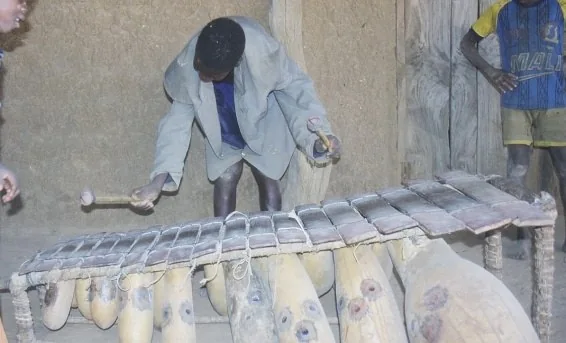
A balafon can cross a border as an instrument. The knowledge that brings it to life travels through people. UNESCO describes the balafon of Senufo communities in Mali, Burkina Faso and Côte d’Ivoire as a wooden-keyed instrument whose keys are arranged above resonators. Making it, tuning it and learning when a particular piece should be played are distinct skills. Displaying an instrument preserves evidence of its construction. It takes a teacher and a learner to pass on what the player does with it.
The webinar also considered Gèlèdé, an oral and performance heritage shared by communities in Benin, Nigeria and Togo, and Kankurang, a Manding initiation tradition associated with Senegal and The Gambia. Each example poses a different documentation question. Recording a piece of music, describing the settings of a ceremony and explaining the significance of a textile pattern require different expertise and different decisions about what can appropriately be made public.
Who decides what is passed on?
For a practice shared between countries, a national inventory can tell a true but incomplete story. Two communities may use different words, teach at different times or attach different meanings to what an outsider treats as a single tradition. A joint nomination gives states a way to describe those connections. Preparing one also means deciding whose account is represented and how communities participate in safeguarding their heritage.
Digital records can support that work. A recording gives an apprentice a chance to hear a phrase repeatedly or notice the timing of a movement. It cannot tell the learner whether a ceremony may be filmed in the first place or whether a particular performance is appropriate on another occasion. Those decisions remain with the people who maintain the practice.
The online meeting brought participants from all 15 West African states into the same discussion. Its most practical question concerns the generation after them. A shared listing can give a tradition greater visibility. Its continuity depends on whether young people have access to practitioners, materials, places and occasions in which they can learn it for themselves.