

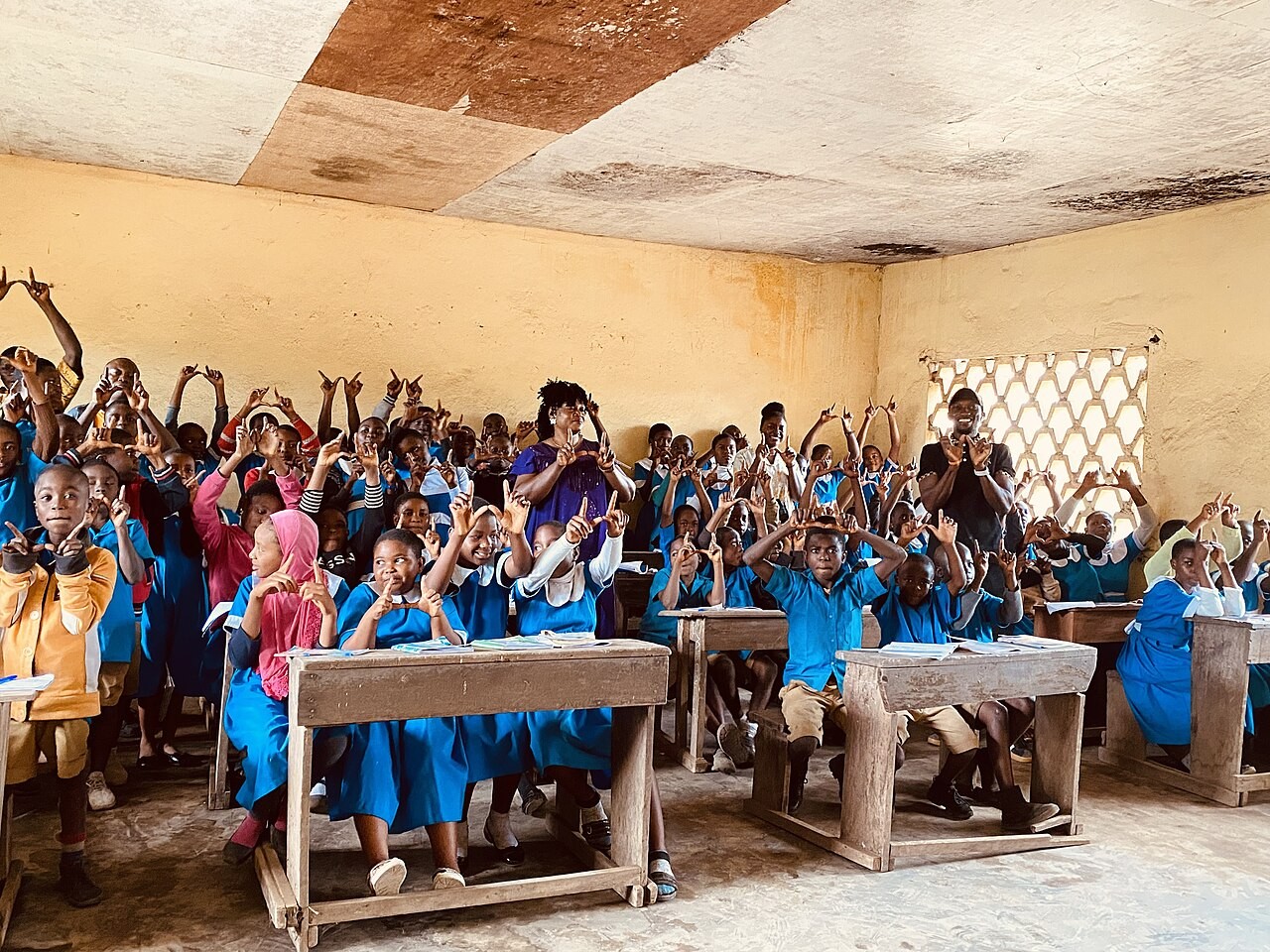
Twice a week, a nine-year-old girl goes to a learning centre in Molyko, in the Cameroonian city of Buea. Until recently she had never been to school. UNESCO, which calls her Grace to protect her identity, says she is now learning to read and write and has an occupation in mind for her future. She would like to become a nurse.
The route into learning in this part of Cameroon’s South-West Region is an unusual one. Radio lessons provide material for children to work through, and facilitators at the centre use practical activities to help them develop early reading and number skills. The sessions are part of an education programme supported by Education Cannot Wait, UNESCO and local partners in a country where conflict has disrupted schooling.
For a child starting at nine, finding a place to begin matters. A lesson pitched at the level normally expected of a nine-year-old assumes years of practice that a newcomer may never have had. Starting with letters and numbers gives a learner a fairer chance to show what she can do. Being able to name a career she would like to pursue is also a way for Grace to imagine where the work might lead, however distant the training for that job may be.
Another part of the programme comes into view at the same centre. Nafisatou, a 24-year-old who works with children with disabilities, adapts activities to help them participate. She also works with parents. UNESCO describes one child making gradual progress in communication. An exercise that lets a child express a choice, respond to a classmate or join a group can represent considerable progress, even when it produces nothing that looks like a completed page of schoolwork.
In Mbouda, in the West Region, a teacher called Paulette has been using games and hands-on activities after training through the programme. Her classroom offers a different example of the same educational challenge. Children joining from displaced families and those already living in the community need ways to learn together, including ways to participate before they feel ready to speak up in front of a class.
UNESCO reports reaching more than 36,000 children through non-formal education. That figure describes access to an opportunity. It cannot say how long each child will attend, what happens when a family moves or whether a learner can progress into formal schooling. For Grace, the most immediate measure is smaller and easier to recognise. She can return to a familiar place twice a week and pick up the reading lesson where she left off.